
Can a dish of neurons learn to navigate toward food in a simulated environment? The answer, remarkably, is yes!
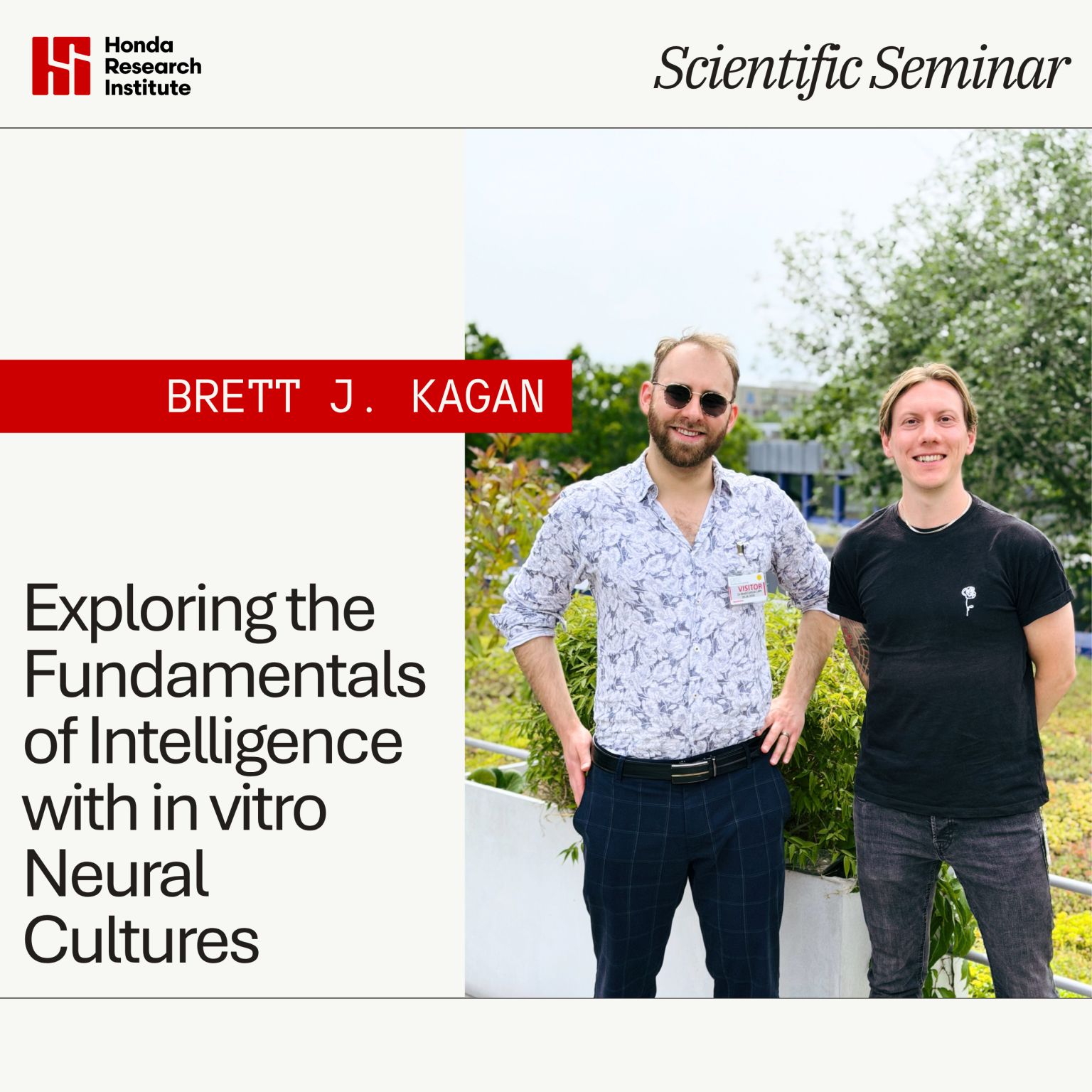 We were glad to welcome Brett J. Kagan from Cortical Labs for the latest talk in our Scientific Seminar series. Brett, who is already collaborating with HRI-EU associate Daniel Tanneberg, traced the path from an initial idea to the world's first biocomputing server cluster powered by living neurons, sharing new data on the cellular basis of biological intelligence.
Synthetic biological intelligence integrates three components: wetware (brain cells differentiated from induced pluripotent stem cells), hardware (life-support systems and microelectrode arrays to record from and stimulate the cells), and software (closed-loop systems that let neurons learn from feedback).
The potential is considerable: more physiologically relevant drug discovery and disease modelling, a rigorous testbed for theories of intelligence, and a promising energy-efficient way to process information. Brett was equally clear that capability and responsibility go hand in hand: Scientific ambition and careful ethical reflection are both part of what drives this field forward.
A thought-provoking session at the intersection of neuroscience, engineering, and a topic close to home, as Biological Intelligence is one of HRI's own core research fields.

